 1. Professor Chong-Wah Ngo
Singapore Management University (SMU)
Dr. Chong-Wah Ngo is a Professor in the School of Computing and Information Systems at Singapore Management University (SMU). He received his PhD in Computer Science from the Hong Kong University of Science and Technology. Prior to joining SMU, he was a Professor at City University of Hong Kong. His research interests include multimedia retrieval, multimodal learning and fusion, computer vision, and video understanding. Dr. Ngo currently serves as an Associate Editor of ACM Transactions on Multimedia Computing, Communications, and Applications (TOMM). He is the General Co-chair of the International Conference on Multimedia Retrieval (ICMR 2027) and previously served as General Chair of The Web Conference (WWW 2024). He has also served as Program Co-chair of ACM Multimedia Asia 2025 and ACM Multimedia 2019.
Talk: What Multimodal Large Language Models See and Miss in Cultural Contexts?
Multimodal large language models (MLLMs) have made substantial progress in image and video question answering (QA). Yet their ability to understand cultural content beyond what is directly visible remains largely underexplored. Cultural understanding requires reasoning over implicit knowledge, traditions, social norms, and temporal context, rather than simply recognizing objects, scenes, or actions. The talk will examine the capabilities of MLLMs in grounding visual evidence for image and video cultural QA, highlighting both their strengths and current limitations. The talk will discuss the challenges in culture-aware visual understanding and outline promising research directions toward context-aware multimodal reasoning. Two new benchmarks, Seeing Culture Benchmark (SCB) and the Cultural Moment Benchmark (CMB), designed to evaluate the reasoning capabilities of MLLMs on Southeast Asia (SEA) cultures, will also be introduced.
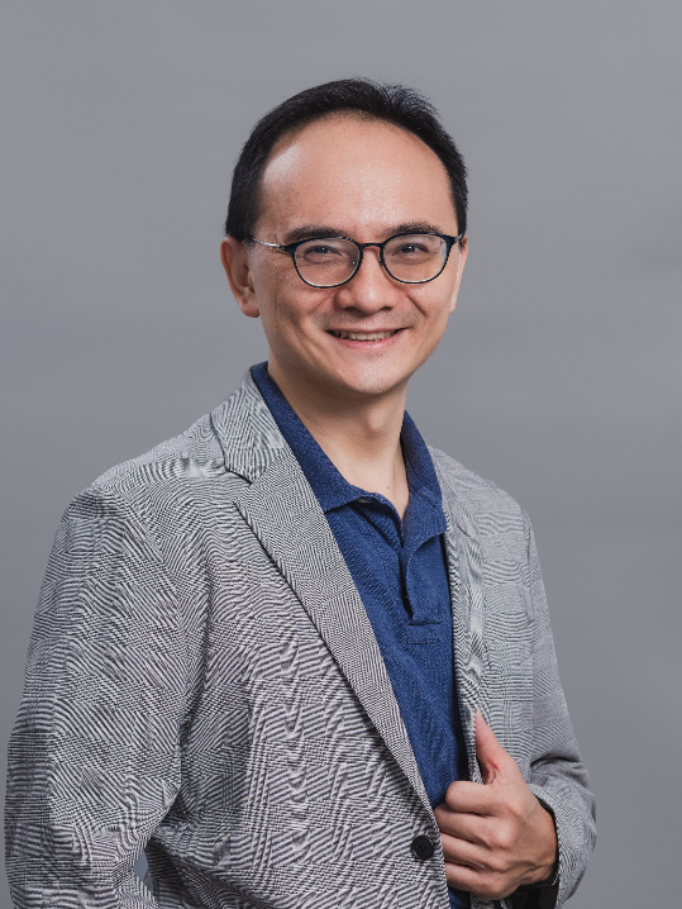 2. Professor Ching-Chun Huang
National Yang Ming Chiao Tung University, Taiwan
Dr. Ching-Chun Huang is a Professor at National Yang Ming Chiao Tung University (NYCU), Taiwan, where he also serves as the Director of the Computer Vision Center. His research interests include Generative AI, Image Restoration and Super-Resolution, Multimedia Processing, Autonomous Driving Perception, and 3D Vision Analysis. Dr. Huang currently serves as an Associate Editor of IEEE Transactions on Circuits and Systems for Video Technology (TCSVT). He has published over 50 papers in top-tier refereed conferences and journals, including ICML, NeurIPS, ICLR, ICCV, CVPR, ECCV, WACV, and ACM MM. Dr. Huang is actively involved in the academic community, having served as General Chair of the IEEE International Conference on Consumer Electronics-Taiwan (ICCE-TW 2022) and Session Chair for the International Computer Symposium (ICS 2024), in addition to serving as program chair for ACM Multimedia Asia, ICME, and VCIP.
Talk: Beyond Perceptual Quality: Towards Geometry- and Physics-Grounded Generative Multimedia AI
Recent advances in generative artificial intelligence have dramatically reshaped multimedia research, enabling unprecedented progress in image restoration, image synthesis, video generation, 3D reconstruction, and digital content creation. While these models produce visually impressive results, they often prioritize perceptual quality over fidelity, leading to geometric inconsistencies, identity drift, physically implausible lighting, and hallucinated content. As generative multimedia systems become increasingly important in real-world applications, improving the faithfulness of generated content has emerged as a critical research challenge.
In this keynote, I will present our lab's (ACM Lab) recent advances in geometry-aware and physics-grounded generative multimedia AI. Through representative research on image restoration, human image synthesis, animatable avatar reconstruction, controllable relighting, and relightable 3D scene reconstruction, I will demonstrate how explicit geometric representations, physical priors, and structured guidance can be integrated with modern generative models to improve fidelity while preserving the remarkable visual quality achieved by diffusion-based generation. These studies illustrate a common and promising research direction toward more consistent, controllable, and physically plausible multimedia generation.
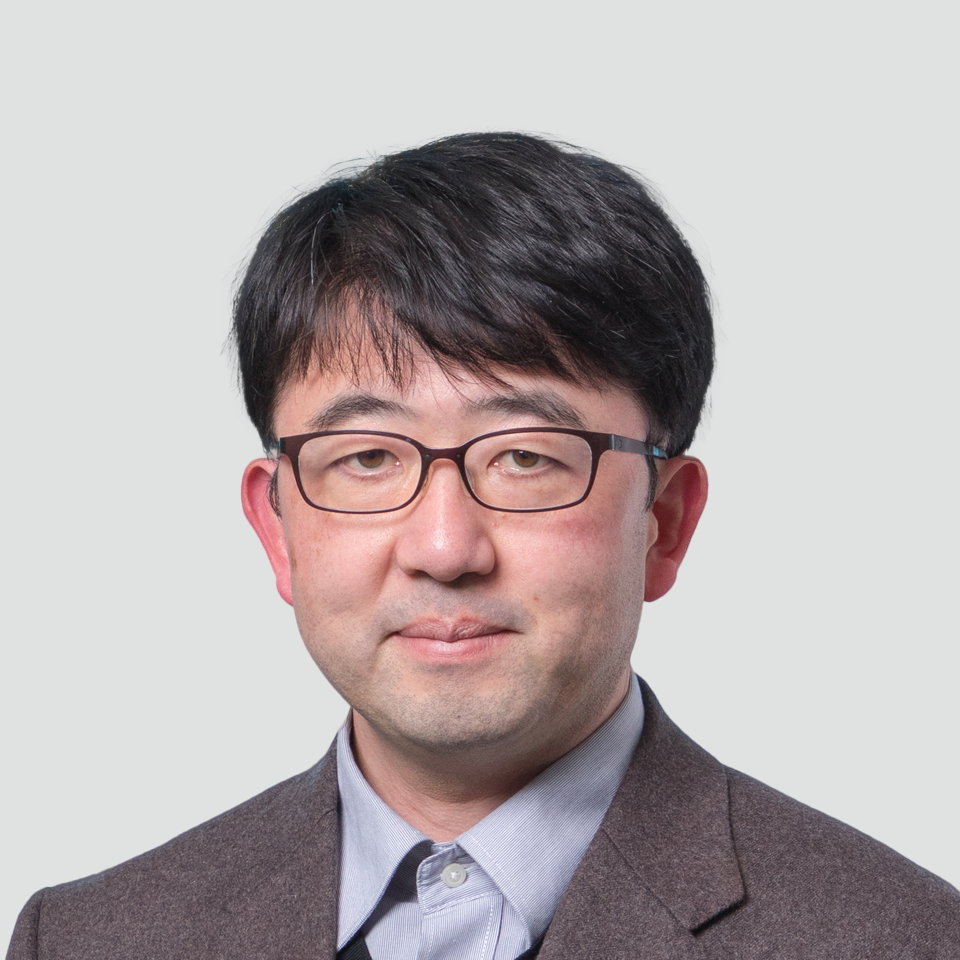 3. Professor Nobutaka Ono
Tokyo Metropolitan University, Japan
Dr. Nobutaka Ono is a Professor at Tokyo Metropolitan University, Japan, where he currently serves as Chair of the Department of Computer Science. He received his B.E., M.S., and Ph.D. degrees in Mathematical Engineering and Information Physics from The University of Tokyo in 1996, 1998, and 2001, respectively. He served as a lecturer at The University of Tokyo and subsequently served as an associate professor and professor at the National Institute of Informatics. In 2017, he moved to Tokyo Metropolitan University. His research interests include acoustic signal processing, particularly microphone-array processing, source localization and separation, machine learning, and optimization algorithms. He has authored or co-authored more than 340 international journal and peer-reviewed conference papers and delivered tutorials at ISMIR 2010 and ICASSP 2018.
Dr. Ono was a member of the IEEE Audio and Acoustic Signal Processing Technical Committee from 2014 to 2019. He served as Technical Program Chair of IWAENC 2018 and General Chair of the DCASE 2020 and DCASE 2024 Workshops. He served as Chair of the IEEE Signal Processing Society Tokyo Joint Chapter in 2023–2024 and has served as Chair of the APSIPA Audio, Acoustics, and Music Technical Committee since 2024. His honors include the Unsupervised Learning ICA Pioneer Award from SPIE DSS, two Sato Paper Awards from the Acoustical Society of Japan, APSIPA ASC Best Paper Awards, and the APSIPA Sadaoki Furui Prize Paper Award. He is a Senior Member of the IEEE.
Talk: Audio at the Edge: Low-Latency Blind Source Separation and Blinky-Based Acoustic Scene Recognition
This talk presents two directions in our research on audio processing at the edge. The first concerns low-latency blind source separation for real-time audio applications. We describe an online independent vector analysis (IVA) framework implemented as an iPhone application, together with algorithmic and implementation techniques that reduce both latency and computational cost, including a two-path architecture and partitioned convolution. We also discuss ongoing work toward robust operation under time-varying conditions, such as microphone-array rotation and moving sound sources. The second direction concerns Blinky, a compact sound-to-light conversion sensor developed in our lab that enables distributed acoustic sensing using a video camera. We present recent work on end-to-end optimization of the sound-to-light encoding process in simulation, as well as Blinky-based acoustic scene recognition using multiple Blinkies deployed in a real laboratory environment. Together, these studies illustrate how edge-oriented design can support both real-time audio enhancement on personal devices and lightweight, spatially distributed sensing of acoustic environments.